





How Wall Street’s Oldest Barometer Impacts Markets from Singapore to Seoul
When Charles Dow published his first industrial average on May 26, 1896, Asia’s great stock exchanges had barely been born. Tokyo’s bourse was just 15 years old; Hong Kong’s exchange had yet to open its doors. Today, many Asian markets take cues from the close of the Dow Jones Industrial Average® (DJIA) before trading begins the next morning. That overnight signal—whether positive or negative—often influences sentiment across Asia-Pacific markets at the open.
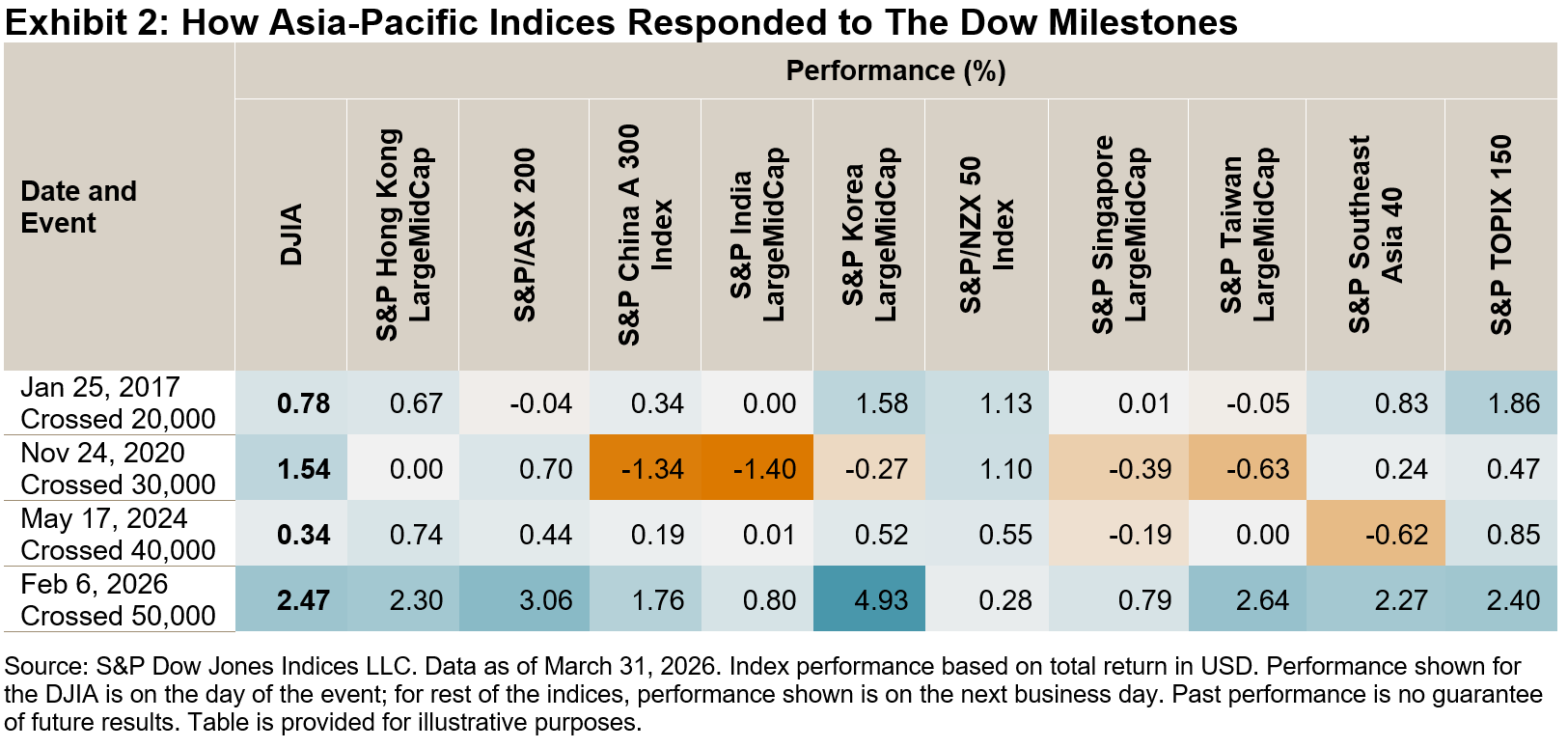
The Dow® crossed 50,000 for the first time on Feb. 6, 2026, a milestone that triggered a surge across Asia-Pacific indices the following session. The relationship between The Dow and the Asia-Pacific region has only deepened over 130 years as supply chains, capital flows and technology have woven the East and West into a single market fabric.
Why the DJIA Matters More than Ever for Asia-Pacific
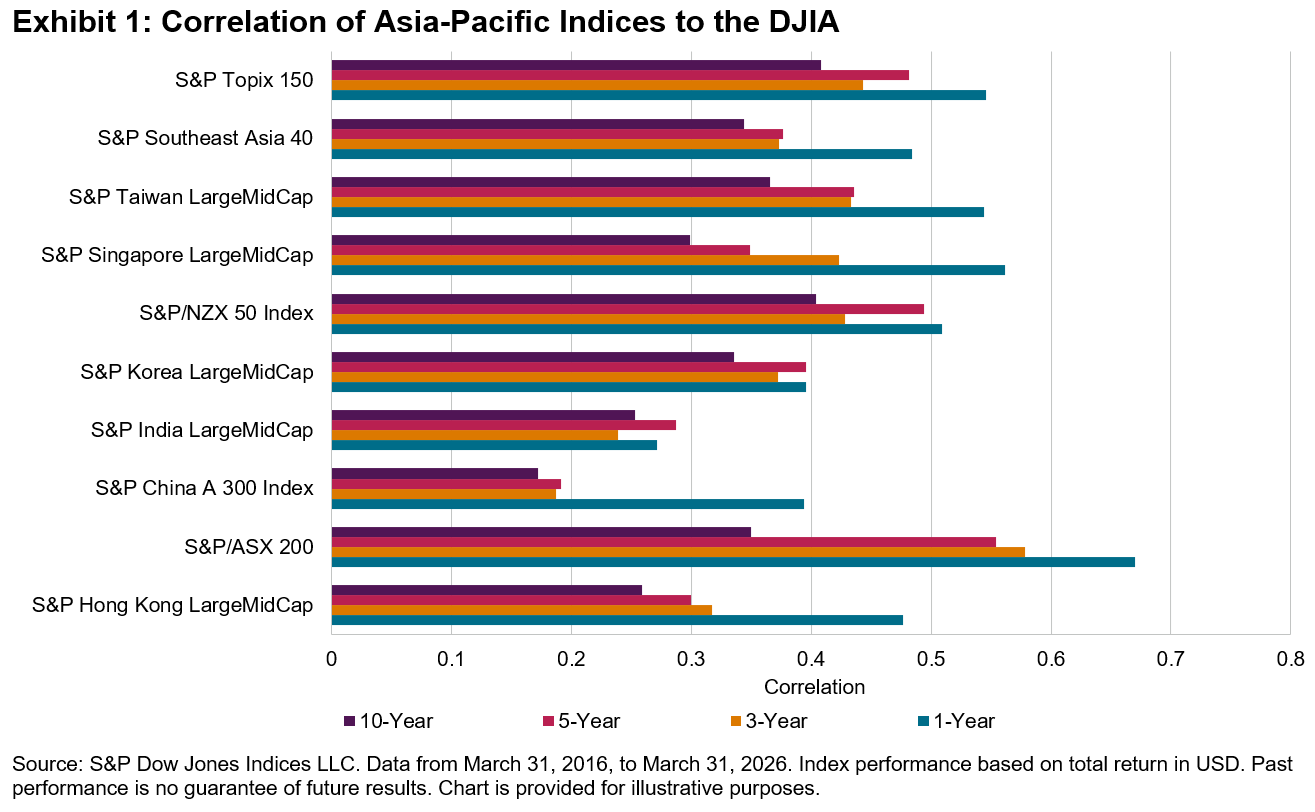
Asia-Pacific markets open hours before Wall Street closes, making the prior U.S. session a critical input. Markets like Hong Kong, Japan, South Korea, Singapore, Australia, New Zealand and India show statistically significant correlation with The Dow, particularly during periods of global stress such as the 2008 Financial Crisis and the 2020 COVID-19 pandemic shock. Sharp moves in U.S. equities often influence the next trading session in Asia-Pacific.
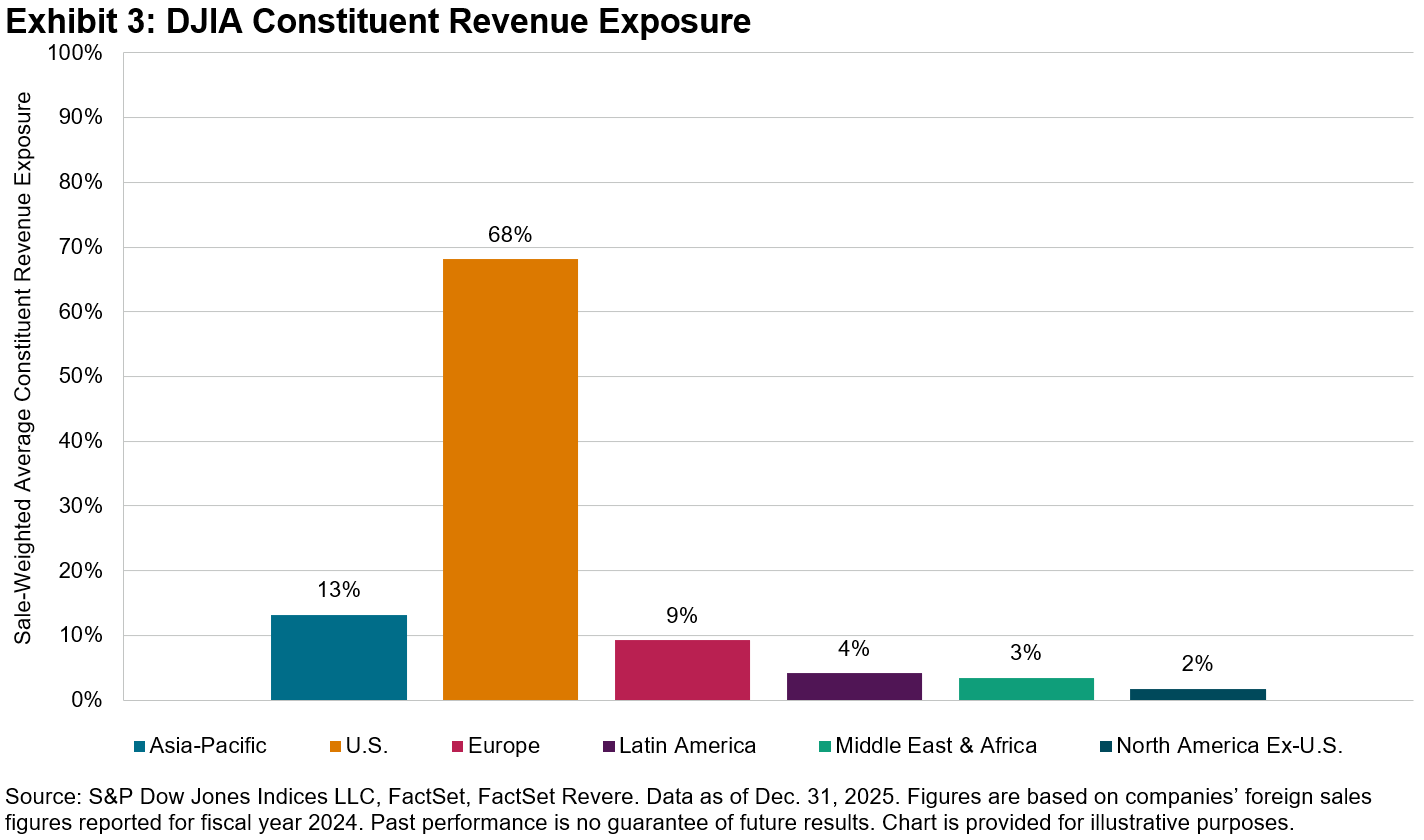
Additionally, the 30 DJIA components derive significant revenues from Asia-Pacific. In fact, outside of the U.S., Asia-Pacific is the region from which DJIA companies derive the largest revenue.
Perhaps the most tangible measure of the DJIA’s relevance to Asia-Pacific is the growing shelf of locally listed ETFs and funds that give retail and institutional investors in the region direct access to the index. Over the past two decades, global and regional asset managers have steadily expanded access to products that track The Dow for Asian market participants.1
What began with the first listed product in Singapore in 2002 has since evolved into a broader regional presence, with DJIA-related products now listed in markets including Taiwan, Japan and South Korea. This expansion not only offers market participants greater choice, but also reflects the enduring popularity and influence of The Dow across Asia-Pacific markets.
Conclusion
After 130 years, the Dow Jones Industrial Average remains a reference point for Asia-Pacific markets. Its daily movements serve as vital signals, influencing trading sentiment from Singapore to Seoul before the local exchanges even open. The Dow’s milestones—like crossing 50,000—have at times been reflected in regional market performance, underscoring the ties between Wall Street and the East. With DJIA companies generating a meaningful share of revenue from Asia-Pacific and the proliferation of The Dow-linked investment products in the region, the index’s relevance has only grown. As global markets become ever more interconnected, The Dow’s legacy endures—not just as a historic barometer, but as a living bridge between economies, helping to guide Asia-Pacific through both calm and crisis.
1 For a complete list of products linked to S&P DJI indices, please visit our Index-Linked Products page.
The posts on this blog are opinions, not advice. Please read our Disclaimers.